

Environmental Protection..
Our activities impact the environment both directly and indirectly. We therefore want to make every effort to position ourselves as an environmentally friendly company within our business activities – a company that keeps its negative impact on the environment to an absolute minimum.
We are well aware that our business activities pose potential risks to the environment and that we rely on resources such as energy, water and building materials. We must therefore make every effort, now and in the future, to keep any negative impact on the environment as low as possible. To achieve this, we have set high environmental standards for ourselves.
Environmental issues
Environmental issues are an integral part of our HSSE management system. Our policy on HSSE stipulates that we use energy and raw materials efficiently, avoid environmental pollution, and promote environmental awareness among our employees so as to minimize harmful influences. For many years now, we have been recording the frequency of product releases and their volume, the amount of energy and water used and the waste produced at our sites and have established corresponding KPIs that enable us to better identify and evaluate our development. Additionally, in order to evaluate our impact on climate change, our holding company Marquard & Bahls calculates the carbon dioxide (CO2) footprint for the entire group.
As a preventive measure in lines with our HSSE management we furthermore monitor the groundwater quality on our tank terminals on a regular basis. The obtained data is evaluated centrally by our environmental experts.
Energy Consumption & Savings
Our company uses direct and indirect energy sources in its offices, and to operate facilities, sites, and vehicles. Direct energy consumption includes natural gas, heating oil and fuel for the operation of our pumps, boilers and operational vehicles. Indirect energy – mainly electricity – is used among other things for product pumps, lighting at our tank terminals, and last, but not least, the computers in our offices worldwide. Other indirect sources of energy that we use include district heating and, to a lesser extent, imported steam.
The most energy-consuming activity is the pumping that takes place at the tank terminals. To detect potential savings and take measures to improve energy efficiency, local activities are aligned with our detailed Energy Saving Guideline. At various sites, further potential for savings for the specific work environment can be identified and general recommendations can be derived.
500K+
Contributing to reforestation and ecosystem restoration efforts worldwide.
- Trees Planted & Restored
98%
Trusted by partners & organizations for reliable, transparent, and impactful solutions.
- Client Satisfaction Rate
The Environmental Projects and Climate Protection Initiatives
We are aware that our business activities impact the environment, and therefore strive to develop alternatives and improve energy efficiency, further optimize our resource management, as well as develop and support environmental protection measures. Many of our sites have set up environmental project groups that, among other things, develop and examine local energy-, water- and waste-saving measures
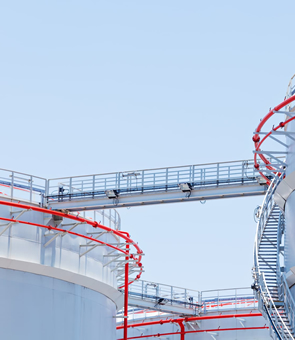

Expert Guidance & Clear Strategy
You'll receive practical, research-backed guidance tailored to your goals.

Measurable Environmental Impact
We focus on real, trackable results reducing waste, improving efficiency.

Support & Transparent Reporting
Our team stays with you beyond implementation offering continuous support.
Frequently Asked Questions
Find clear answers to the most common questions about our services, process, and approach. This section is designed to give you quick, helpful information, save you time, and help you make confident decisions.
Our team works closely with organizations and communities to develop responsible strategies, optimize resource use, reduce environmental impact, and track measurable results that contribute to long-term environmental and social benefits.
Our team works closely with organizations and communities to develop responsible strategies, optimize resource use, reduce environmental impact, and track measurable results that contribute to long-term environmental and social benefits.
Our team works closely with organizations and communities to develop responsible strategies, optimize resource use, reduce environmental impact, and track measurable results that contribute to long-term environmental and social benefits.
Our team works closely with organizations and communities to develop responsible strategies, optimize resource use, reduce environmental impact, and track measurable results that contribute to long-term environmental and social benefits.
Our team works closely with organizations and communities to develop responsible strategies, optimize resource use, reduce environmental impact, and track measurable results that contribute to long-term environmental and social benefits.
